Unveiling Precision: A Comparative Guide to Sheet Metal Cutting Technologies
In the dynamic world of modern manufacturing, precision and efficiency in sheet metal fabrication are paramount. The foundation of any high-quality metal product often begins with its cutting process. With a myriad of advanced technologies available today, selecting the most suitable method for your project can significantly impact quality, cost, and lead time. At Cơ Khí Nhật Nam, a leading provider of high-tech and precision sheet metal fabrication services in Vietnam, we understand these complexities intimately. Our commitment to excellence is reflected in our continuous investment in state-of-the-art machinery and our deep technical expertise, enabling us to deliver superior solutions tailored to your exact requirements.
This comprehensive guide delves into a detailed comparison of sheet metal cutting technologies, providing insights into their operational principles, advantages, limitations, and ideal applications. We aim to equip you with the knowledge needed to make informed decisions, highlighting how Cơ Khí Nhật Nam leverages these technologies, underpinned by ISO 9001:2015 certified quality management, to consistently exceed customer expectations.
The Foundation of Fabrication: An Overview of Key Cutting Technologies
Sheet metal cutting is the process of separating metal sheets into desired shapes and sizes. While traditional methods like shearing and sawing still exist, modern industrial applications demand higher precision, speed, and versatility. The most prominent technologies driving the industry forward include Laser Cutting, CNC Punching, Plasma Cutting, and Waterjet Cutting. Each possesses distinct characteristics that make it suitable for specific types of tasks and materials.
1. Laser Cutting (Fiber Laser)
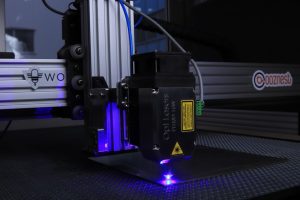
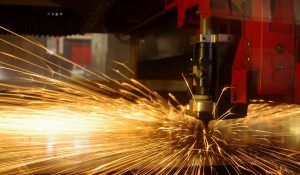
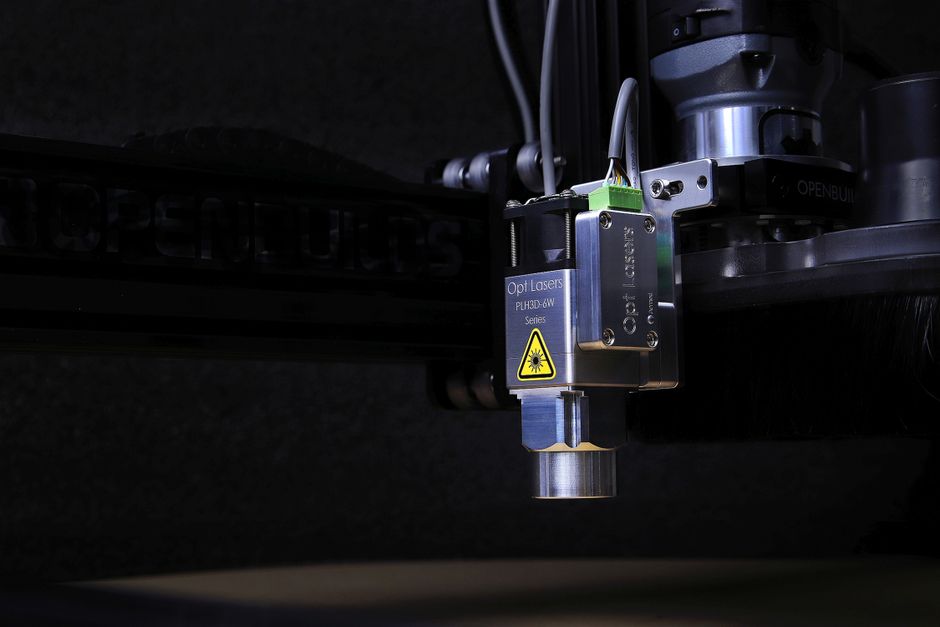
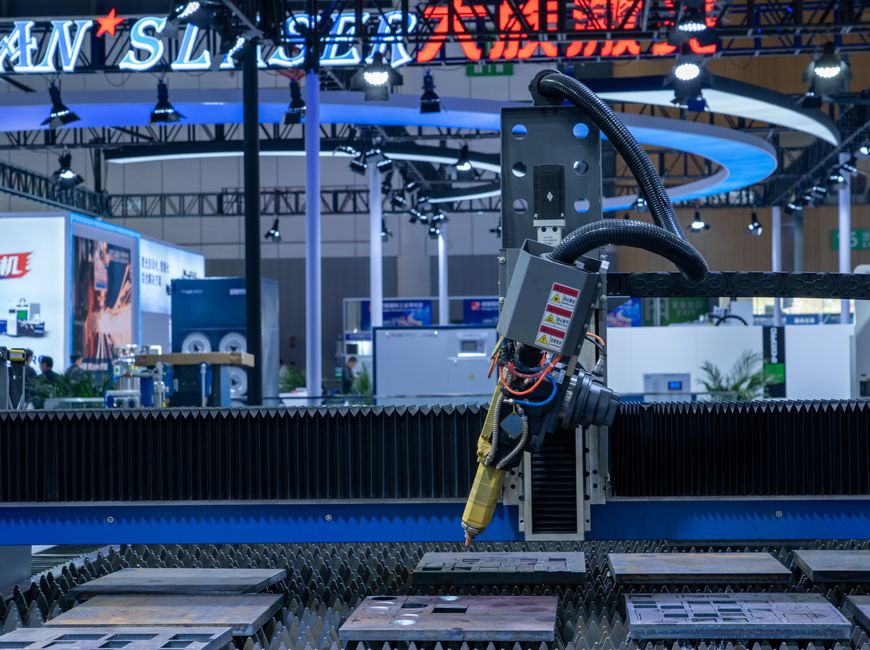
Laser cutting is a thermal cutting process that uses a focused high-power laser beam to melt, burn, or vaporize material in its path. Fiber laser technology, in particular, has revolutionized the industry due to its superior efficiency, speed, and versatility, especially for thin to medium gauge metals.
- How it works: A highly focused laser beam, generated by diodes and transmitted through an optical fiber, melts the material. A coaxial gas (usually oxygen or nitrogen) then blows the molten material away, creating a clean cut.
- Co Khi Nhat Nam’s Edge: We utilize advanced Fiber Laser cutting machines, renowned for their exceptional power, speed, and cutting precision. These machines enable us to process a wide range of materials, from stainless steel and mild steel to aluminum and copper, with unparalleled edge quality and minimal heat-affected zone (HAZ). Our investment ensures rapid prototyping and high-volume production with consistent accuracy.
2. CNC Punching
CNC (Computer Numerical Control) Punching is a mechanical cutting process that uses a turret punch press to rapidly stamp out shapes from a metal sheet. It’s highly effective for creating holes, slots, and various patterns, especially in thinner materials.
- How it works: A punch and die set is used to shear through the material. The CNC system precisely controls the position of the sheet and the selection of punches, allowing for complex patterns to be created quickly and repeatedly.
- Cơ Khí Nhật Nam’s Edge: Our state-of-the-art CNC punching machines offer high-speed processing for repetitive features and complex geometries. This technology is particularly cost-effective for medium to high volume production, offering additional benefits like forming capabilities (louvers, dimples, threads) directly on the machine, reducing subsequent processing steps.
3. Plasma Cutting
Plasma cutting is a thermal cutting process that uses an accelerated jet of hot plasma to cut through electrically conductive materials. It’s particularly effective for cutting thick metal plates at higher speeds than laser for certain thicknesses.
- How it works: An electric arc is passed through a gas (such as air, oxygen, nitrogen, or a mixture), ionizing it to create plasma. This superheated plasma jet is then directed at the workpiece, melting and blowing away the molten metal.
4. Waterjet Cutting
Waterjet cutting is a non-thermal process that uses a high-pressure stream of water, often mixed with an abrasive grit, to erode material. Its cold cutting nature makes it ideal for materials sensitive to heat or those with complex contours.
- How it works: Water is pressurized to extremely high levels and forced through a small nozzle, creating a high-velocity jet. For harder materials, an abrasive (like garnet) is added to the water stream to enhance its cutting power.
A Deep Dive: Comparing Sheet Metal Cutting Technologies
To truly understand which technology best suits your project, a detailed comparative analysis across key performance indicators is essential. Cơ Khí Nhật Nam’s expertise allows us to guide you through this selection process, ensuring optimal outcomes.
1. Precision and Accuracy
- Fiber Laser Cutting: Unmatched precision with tolerances often down to ±0.05 mm, producing extremely fine contours and intricate details. The narrow kerf (cut width) minimizes material loss and allows for complex designs.
- CNC Punching: High precision for holes and symmetrical shapes, typically within ±0.1 mm. Accuracy can vary slightly with material thickness and tool wear. Best for designs with repetitive patterns or standard holes.
- Plasma Cutting: Good precision, generally ±0.25 – ±0.5 mm. Less precise than laser but suitable for applications where extremely tight tolerances are not critical, especially for thicker materials.
- Waterjet Cutting: Excellent precision, often comparable to laser, especially with advanced control systems (around ±0.1 mm). It can cut intricate shapes and fine details without thermal distortion.
2. Speed and Productivity
- Fiber Laser Cutting: Extremely fast for thin to medium gauge metals (up to 12-15mm for steel, depending on power). Its rapid processing speed makes it ideal for high-volume production and quick turnarounds.
- CNC Punching: Very fast for repetitive punching operations, particularly for many small holes or standard shapes. Tool changes are quick, contributing to high throughput for specific tasks.
- Plasma Cutting: Faster than laser for cutting very thick materials (over 20-25mm) but generally slower than laser for thinner sheets.
- Waterjet Cutting: Generally slower than laser and plasma cutting, especially for thicker materials, due to the erosive nature of the process. However, multi-head systems can improve throughput.
3. Material Versatility and Thickness
- Fiber Laser Cutting: Highly versatile, capable of cutting a wide range of metals including stainless steel, mild steel, aluminum, copper, brass, and even reflective materials, with thicknesses typically up to 25-30mm for steel and 15-20mm for aluminum (depending on laser power).
- CNC Punching: Best suited for thinner sheets (typically up to 6-8mm, though some machines can handle thicker). Ideal for steel, stainless steel, and aluminum. Not suitable for very hard or brittle materials.
- Plasma Cutting: Excellent for cutting thick, electrically conductive metals, including steel, stainless steel, and aluminum. Can cut thicknesses exceeding 50mm, sometimes up to 150mm for specialized systems.
- Waterjet Cutting: Unparalleled material versatility. Can cut virtually any material, including metals (even very thick ones), composites, plastics, glass, and ceramics. Ideal for heat-sensitive materials as it’s a cold cutting process.
4. Edge Quality and Heat-Affected Zone (HAZ)
- Fiber Laser Cutting: Produces extremely clean, smooth edges with minimal to no burr, often requiring no secondary finishing. The HAZ is very narrow due to the focused energy and rapid cutting speed, preserving material properties.
- CNC Punching: Edges typically have a slight burr on the underside due to the shearing action, often requiring deburring. No HAZ as it’s a mechanical process.
- Plasma Cutting: Edges are typically rougher than laser or waterjet, with some dross (molten material that re-solidifies) and a wider HAZ. Often requires secondary finishing like grinding.
- Waterjet Cutting: Produces very smooth, high-quality edges, comparable to laser, and importantly, no HAZ as it’s a cold cutting process. This makes it ideal for materials where thermal distortion or changes in material properties are unacceptable.
5. Cost-Effectiveness
- Fiber Laser Cutting: High initial investment in machinery, but low operational costs due to energy efficiency and high speed. Cost-effective for complex shapes, prototypes, and high-volume production of medium thickness parts due to minimal material waste and reduced post-processing.
- CNC Punching: Lower initial machine cost than laser. Very cost-effective for projects with many standard holes or simple cutouts, especially in thinner materials and high volumes. Tooling costs for custom shapes can add up.
- Plasma Cutting: Moderate initial investment and operational costs. Most cost-effective for cutting thick materials quickly where edge finish is not critical.
- Waterjet Cutting: High initial investment. Operational costs can be higher due to abrasive consumption, but competitive for specific applications (heat-sensitive, very thick, or diverse materials) where alternative methods are unsuitable or require extensive post-processing.
6. Forming Capabilities and Other Considerations
- Fiber Laser Cutting: Primarily a cutting tool. No forming capabilities on the machine itself.
- CNC Punching: Unique capability to perform forming operations such as louvers, dimples, knockouts, and extrusions directly on the sheet, saving subsequent processing steps and time.
- Plasma & Waterjet Cutting: Primarily cutting tools, no forming capabilities.
Why Co Khi Nhat Nam Excels in High-Precision Sheet Metal Cutting
Choosing the right cutting technology is a critical decision, and at Cơ Khí Nhật Nam, we leverage our deep understanding and extensive capabilities to provide optimal solutions for our clients. We don’t just offer advanced machinery; we offer a partnership rooted in expertise, reliability, and precision.
1. State-of-the-Art Technology Portfolio
Our commitment to staying at the forefront of the industry is evident in our investment in cutting-edge equipment. We boast:
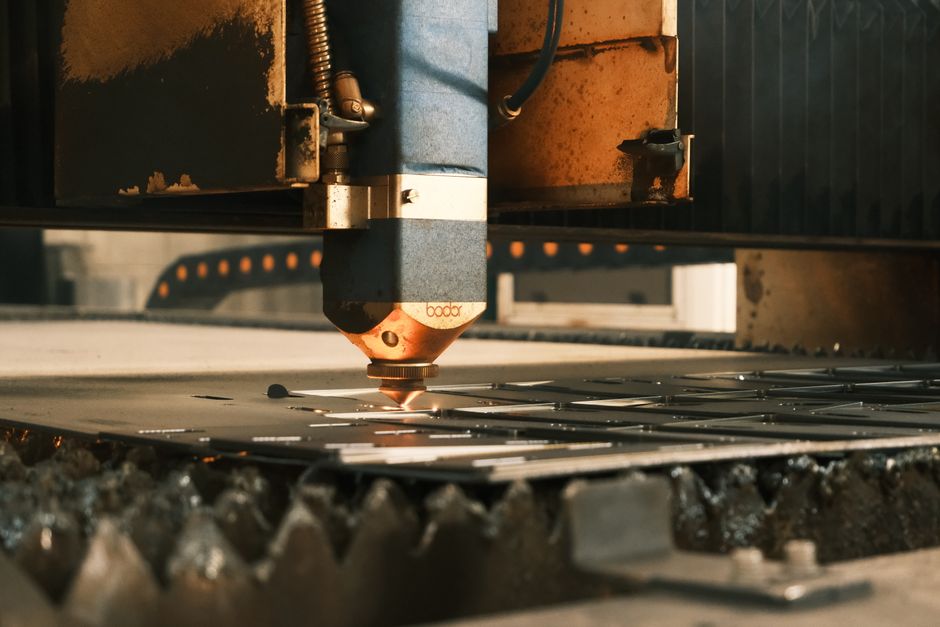
- High-Power Fiber Laser Cutting Machines: Capable of handling diverse materials and thicknesses with extreme precision and speed, making us a leader in complex sheet metal fabrication. Our machines ensure clean cuts, minimal distortion, and high efficiency, translating into superior product quality and faster lead times for our clients. Explore our Laser Cutting services here.
- Advanced CNC Punching Machines: For rapid and cost-effective processing of parts with numerous holes, slots, or forming features. Our CNC punching capabilities reduce secondary operations, enhancing overall project efficiency. Discover our CNC Punching solutions.
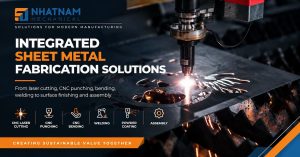
- Complementary Fabrication Equipment: Beyond cutting, we integrate these processes with other high-tech machinery such as 6-axis Robotic Welding systems and precision CNC Bending/Folding machines to offer comprehensive, end-to-end fabrication solutions.
2. Unwavering Commitment to Quality and Precision
Quality is not just a buzzword at Cơ Khí Nhật Nam; it is ingrained in every aspect of our operations. We are proud to be ISO 9001:2015 certified, a testament to our robust quality management systems. This certification guarantees that our processes consistently meet international standards for quality and efficiency, ensuring that every cut, every bend, and every weld adheres to the highest levels of precision and reliability. Our dedicated quality control team meticulously inspects each product, ensuring it meets your exact specifications and performance requirements.
3. Experienced Engineering and Technical Team
Our advanced machinery is operated by a highly skilled and experienced team of engineers and technicians. With years of expertise in diverse industrial applications, they possess the technical acumen to optimize cutting parameters for various materials and geometries, troubleshoot complex challenges, and recommend the most effective fabrication strategies. Their dedication ensures that even the most intricate designs are executed with flawless precision.
4. Comprehensive Solutions and Material Expertise
Co Khi Nhat Nam is more than just a cutting service. We offer a holistic approach to metal fabrication, from initial design consultation and material selection to cutting, forming, welding, and finishing. Our extensive experience covers a wide array of materials, including:
- Stainless Steel (SUS 304, 316, 201)
- Mild Steel (SS400, A36, Q235)
- Aluminum Alloys (A5052, A6061)
- Copper and Brass
This broad material expertise, combined with our diverse technological capabilities, allows us to provide flexible and innovative solutions for industries ranging from automotive and electronics to construction and furniture.
The Tangible Benefits for Your Business Partnership with Co Khi Nhat Nam
Partnering with Cơ Khí Nhật Nam for your sheet metal fabrication needs translates into significant advantages for your business:
- Superior Product Quality: Leveraging advanced cutting technologies and stringent quality control ensures your products meet the highest standards of precision and finish.
- Reduced Lead Times: High-speed laser cutting and efficient CNC punching capabilities, combined with streamlined processes, guarantee faster project completion and on-time delivery. Our commitment to deadlines is unwavering.
- Cost Optimization: By selecting the most appropriate and efficient cutting technology for each part, we help minimize material waste, reduce post-processing requirements, and optimize overall production costs without compromising quality.
- Design Flexibility and Complexity: Our diverse technology portfolio allows for the creation of intricate geometries and complex designs that might be challenging or impossible with less advanced methods.
- Reliability and Trust: Our ISO 9001:2015 certification and long-standing reputation as a reliable partner mean you can trust us to deliver consistent quality and exceptional service.
Conclusion: Your Partner in Precision Metal Fabrication
The choice of sheet metal cutting technology is a critical factor in the success of any fabrication project. While each method—Fiber Laser, CNC Punching, Plasma, and Waterjet—offers unique advantages, the key lies in understanding their interplay and applying the right technology to the right application. At Cơ Khí Nhật Nam, we pride ourselves on our ability to navigate this complex landscape. Our extensive investment in modern technology, coupled with our ISO 9001:2015 certified processes and a team of dedicated experts, positions us as your ideal partner for all high-precision sheet metal fabrication needs.
We are not just a service provider; we are a solution provider committed to driving the success of your projects through unparalleled quality, efficiency, and technical expertise. Let us transform your designs into reality with the precision and reliability you deserve.
Contact Nhat Nam Mechanical Engineering for advice tailored to your needs. Contact Cơ Khí Nhật Nam today for a consultation tailored to your specific requirements.
Frequently Asked Questions
What is the most precise sheet metal cutting technology?
Fiber Laser cutting is generally considered the most precise sheet metal cutting technology, capable of achieving tolerances often down to ±0.05 mm. It produces extremely fine contours and minimal heat-affected zones, ideal for intricate designs.
When should I choose CNC Punching over Laser Cutting?
CNC Punching is often more cost-effective for projects requiring many standard holes, slots, or repetitive patterns in thinner materials (typically up to 6-8mm). It also offers unique forming capabilities directly on the machine, which laser cutting does not. For very intricate designs or thicker materials, laser cutting is usually preferred.
Can Co Khi Nhat Nam cut very thick metal sheets?
Yes, Cơ Khí Nhật Nam utilizes high-power Fiber Laser cutting machines capable of processing various metals, including steel up to 25-30mm and aluminum up to 15-20mm, with precision. For specific very thick applications, we evaluate the best technology, which might include plasma cutting capabilities depending on the material and required finish.
What materials can Co Khi Nhat Nam process?
Co Khi Nhat Nam has extensive expertise in processing a wide range of materials, including Stainless Steel (SUS 304, 316, 201), Mild Steel (SS400, A36, Q235), Aluminum Alloys (A5052, A6061), Copper, and Brass. Our diverse technology allows us to handle various material characteristics efficiently.
What quality standards does Cơ Khí Nhật Nam adhere to?
Co Khi Nhat Nam is ISO 9001:2015 certified, which demonstrates our adherence to international standards for quality management systems. This ensures consistent quality, efficiency, and reliability in all our sheet metal fabrication processes.
Other posts